
My Private Pilot Checkride: Oral and Flight Review
Intro
It wasn’t a test of how much I had memorized. It was a test of whether I could use it.
- This is a review of my Private Pilot checkride: what the DPE asked, how I answered, and what I learned.
- The answers below are what I actually said during the exam, not necessarily the correct ones. Where I got something wrong, I added the correct answer as a note.
- For a keyword review of the oral topics, see my Private Pilot Checkride Oral Cheat Sheet. For how I study for the oral, see How I Prepare for the Checkride Oral.
⚠️ Every DPE is different. This is one checkride, one day, one examiner. Always prepare from the Private Pilot ACS.
1. Overall Review
- More than half of the questions were scenario-based, either built on the cross-country scenario given in advance or completely new situations. The DPE said he couldn’t give me the answers, but he would nudge me in the right direction when I went off track.
- It didn’t feel like he was testing how much I knew. He used questions to teach things that are hard to apply in real flying if you only memorize them from a textbook. He focused on practical knowledge a private pilot needs in the airplane. For example, he didn’t ask anything complex about runway lights, just “What color are runway lights?” and “What color are taxiway lights?” and moved on.
- From other people’s experiences, I assumed DPEs prefer official FAA sources like aviationweather.gov or 1800wxbrief over ForeFlight. But when I told him I mainly use ForeFlight, he called it a great resource and didn’t push me toward FAA sources.
2. Topics Covered in the Oral
- Regulations, Documents, Human Factors, ADM
- IMSAFE, required documents, pilot certificate expiration, currency, ARROW, AV1ATE, airworthiness, airworthiness certificate, registration expiration
- 91.205, 91.213, currency vs proficiency, fuel requirements
- carbon monoxide poisoning, motion sickness, medication
- Systems & Performance
- weight and balance
- ignition system and magnetos
- primary and secondary flight controls, max weight
- altimeter accuracy (±75 ft)
- Cross-Country, Airport, Weather
- VFR flight plan
- NWKRAFT, cruising altitude, MEF, GPS satellites
- night runway illusions, runway and taxiway light colors, survival gear for cold regions
- ceiling, visibility, wind components, personal minimums, wake turbulence, thunderstorms, icing
- TAF, METAR, AIRMET, SIGMET
- Charts & Airspace
- TRSA, requirements for Class B/C/D, vertical limits of each airspace
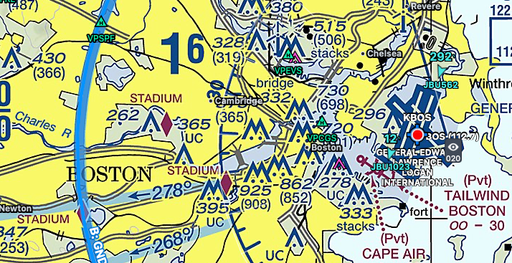
- magenta diamond (intermittent TFR site)
- special use airspace
3. Oral
3.1 Start
- Self-introduction, then the DPE explained the pass / fail / discontinuance process.
- The first question was about my familiarity with the ACS. I said I had referenced it a lot but hadn’t read it cover to cover. At that moment I had a feeling this wasn’t going to be the smoothest oral.
- He then asked how I prepared. I said I mainly used the ASA Private Pilot Oral Exam Guide, and he kept emphasizing that preparation should be centered on the ACS. He repeated this from the start of the oral all the way until I walked out after the flight.
3.2 Scenario-Based Questions
- Scenario (given 2 days before): a daytime departure with two friends to attend an event, returning at night.
- How do you decide whether to fly that day?
- IMSAFE.
- What will you check while planning the flight?
- NWKRAFT.
- How did you choose your cruising altitude?
- Odd thousands + 500 (VFR cruising altitude, 91.159).
- MEF. (He seemed to like that I mentioned MEF.)
- Total distance, time, and fuel?
- Answered from my navlog.
- Read the METAR and TAF for Westfield (KBAF).
- When I started on the RMK section, he said I didn’t need to.
- What does TAF stand for?
- Terminal Aerodrome Forecast.
- What area does a TAF cover?
- 5 SM radius from the center of the runway complex.
- How long is a TAF valid?
- I didn’t answer correctly.
- Correct answer: 24 hours, or 30 hours at some larger airports. Issued 4 times a day.
- An hour before departure, while you’re preflighting, FAA inspectors show up and ask for documents. What do you need to have with you?
- Pilot certificate, medical certificate, and a government-issued photo ID.
- Follow-up questions:
- pilot certificate expiration, staying current, ARROW, AV1ATE, airworthiness, airworthiness certificate expiration, registration expiration, currency vs proficiency
- One of your friends brings an extra person at the last minute. Now you have three passengers instead of two. What will you do?
- Not go.
- That’s your choice, but it’s not the most realistic answer. Any other options?
- Recalculate weight and balance, and if within limits, take them.
- You redo the W&B and you’re 50 lbs over max weight. What now?
- Not go.
- That’s your choice, but it’s not the most realistic answer. Any other options?
- If I had full tanks, I’d remove some fuel.
- Good. How much fuel would you remove?
- About 9 gallons. (50 lbs ÷ 6 lbs/gal ≈ 8.3 gal)
- How much fuel do you need?
- VFR fuel requirements (91.151): day 30 min, night 45 min reserve at normal cruise.
- After removing fuel, you meet the day requirement but won’t have enough for the night portion. What will you do?
- Not go.
- No, it’s legal to fly. I’m asking what you will do. Stop saying you won’t go.
- I’d plan a fuel stop on the way.
- Good. Right before departure, the weather looks questionable. What do you do?
- Check the winds, ceiling, and visibility.
- OVC010, calm winds. Will you depart?
- Probably not.
- Why not?
- The wind is fine, but the ceiling is too low.
- So how do you make that decision?
- Personal minimums. (He was clearly waiting for this.)
- Exactly. What are your personal minimums?
- Day: ceiling ≥ 3,000 ft, crosswind ≤ 8 kt, visibility ≥ 5 SM.
- Just before takeoff, you notice the landing light isn’t working. What do you do?
- Per 91.205 it’s not required for day, so I can go. But I wouldn’t be able to fly at night.
- Are you sure? What are the night equipment requirements?
- FLAPS.
- Where in 91.205 does it say that?
- 91.205(c)(4): if the aircraft is operated for hire, one electric landing light is required.
- What does “for hire” mean?
- Flying for compensation.
- How does the FAA define “for hire”?
- I wasn’t sure.
- You’re renting the plane from a flight school. Does that make it “for hire”? Are you making money on this flight?
- No.
- What about taking your friends somewhere?
- No, I don’t think so.
- Right, it’s not. So?
- Since my flight isn’t for hire, I can legally fly at night with the landing light inoperative.
- Correct. Make sure you understand that. Now, if you fly at night with the landing light inoperative, what do you need to do?
- Per 91.213, deactivate it and placard it as inoperative.
- Show me exactly where it says that.
- 91.213(d)(3)(ii): deactivated and placarded “Inoperative.” If deactivation involves maintenance, it must be done and recorded per Part 43.
- Show me your navigation log and VFR flight plan.
- (Looking at the flight plan) Did you fill this out with your instructor?
- No, I did it myself.
- Where did you get this form?
- I found it online.
- This form is obsolete. It hasn’t been used for a long time. You need to use the ICAO flight plan form (FAA Form 7233-4).
- Sorry, I didn’t know.
3.3 Other Questions
I don’t remember the exact order, so these are listed as they come to mind. Again, these are my answers during the exam, not necessarily the correct ones.
- TAF
- I couldn’t give the validity period. (See 3.2.)
- Motion sickness: symptoms, causes, and which part of the body is responsible?
- I wasn’t sure about the body part.
- Correct answer: the inner ear (vestibular system), from conflicting signals between the inner ear and the eyes.
- Night runway illusions: how would you handle them?
- Rely on instruments.
- Which instrument?
- Altimeter. (A VASI/PAPI, if available, also helps.)
- Primary and secondary flight controls?
- Primary: ailerons, rudder, elevator.
- Secondary: flaps, trim.
- The airplane is parked outside overnight and the surface temperature drops to the dewpoint (below freezing). What will you find in the morning?
- Frost.
- What is a magneto?
- A small generator that produces its own electricity for the spark plugs, independent of the airplane’s electrical system.
- Maximum takeoff weight?
- 2,325 lbs (for the airplane I flew).
- Wake turbulence avoidance?
- Rotate before the point where the preceding aircraft rotated, stay above its flight path, land beyond its touchdown point.
- When is an AIRMET issued? Give a few conditions.
- Moderate turbulence, moderate icing.
- (Also: IFR conditions and mountain obscuration for Sierra, sustained surface winds of 30 kt or more and low-level wind shear for Tango, freezing level for Zulu.)
- What does AIRMET Tango indicate?
- Moderate turbulence.
- When is a SIGMET issued? Give a few conditions.
- Severe icing, severe turbulence.
- (Also: extreme turbulence, dust or sandstorms lowering visibility below 3 SM, volcanic ash.)
- How far should you stay from a thunderstorm?
- 20 NM.
- How do you know you’re 20 NM away?
- I guessed I could check on my instruments.
- Do you have that kind of equipment?
- I’m not sure.
- Then what would you do?
- Ah, ask ATC.
- Exactly.
- How many satellites does GPS need?
- I said 6. After the oral I was told the answer is 5.
- Note: 4 satellites for a 3D position, 5 for RAIM (integrity monitoring), 6 for RAIM with fault detection and exclusion.
- Runway light colors?
- White.
- Taxiway light colors?
- I said green. After the oral I was told it’s blue.
- Note: taxiway edge lights are blue, taxiway centerline lights are green. So I was half right.
- If you fly over a cold region, what survival gear should you carry in case of an off-airport landing?
- Warm clothes… honestly, I hadn’t thought about it.
- After the oral, the DPE mentioned food, water, a flashlight, warm clothes, blankets, and tarps.
- If you set the Kollsman window to 29.92, what’s the allowable altimeter error?
- I didn’t fully understand the question.
- After the oral, the DPE said ±75 ft.
- Note: the ±75 ft check is done with the Kollsman window set to the current local altimeter setting. The altimeter should then read field elevation within ±75 ft. With 29.92 set, it shows pressure altitude instead, so I think this was a mix-up in how the question was phrased or how I remembered it.
- Your carbon monoxide detector shows dangerously high levels. What do you do?
- I said “open the vents and land.” After the oral, he said the answer should also include turning the cabin heat off.
- He also mentioned I had missed this on my written exam.
- Land as soon as possible, or as soon as practical?
- I wasn’t sure what “as soon as practical” meant, so I said “as soon as possible.”
- He didn’t correct me afterward, so I assume that was right.
- Note: “as soon as possible” means land at the nearest suitable area without delay. “As soon as practical” means you may continue to a more suitable airport, at the pilot’s discretion.
- What do you do during the postflight?
- Tie down and check for external damage.
- Is that all?
- I admitted I wasn’t sure. He didn’t elaborate even after the oral.
- (Others: control lock, chocks, fuel and oil check, pitot cover, log any squawks, close your flight plan.)
3.4 VFR Sectional Chart
It felt like the DPE wanted to see whether I could read a paper chart, not just rely on ForeFlight.
- Pointed to a Class C and asked what it was.
- What does ATC need to say for you to enter Class C?
- Your call sign. (Two-way radio communication established.)
- What about Class B?
- An explicit clearance: “cleared into the Class Bravo.”
- What is the radius of Class C?
- 5 NM inner ring, 10 NM outer ring.
- Class D?
- 4 NM radius (typically).
- What’s the ceiling of Class D?
- Typically 2,500 ft.
- You said 2,500 ft, but why do different airports on the chart show different values?
- I couldn’t answer.
- Answer: it’s typically 2,500 ft AGL, but the chart shows the ceiling in MSL, so the number changes with field elevation.
- He pointed at different areas and asked me to identify special use airspace.
- How do you find more details about special use airspace like P-67 or W-102?
- In the special use airspace table on the chart.
- He pointed at a magenta diamond and asked what it meant.
- I didn’t know. After the oral, I was told it marks an intermittent TFR site, like the stadiums below.
- Note: stadium TFRs are 3 NM radius, up to 3,000 ft AGL, from 1 hour before to 1 hour after qualifying events.
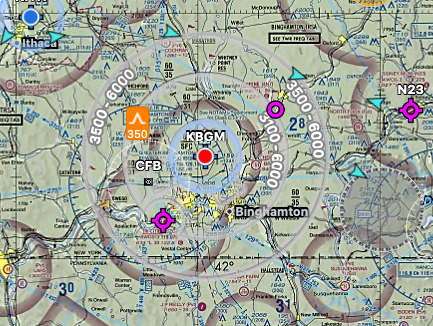
- He asked about a gray-shaded area on the chart and how to enter it.
- TRSA (Terminal Radar Service Area).
- I explained that it’s similar to Class D, where two-way radio communication is recommended but not required.
- Note: a TRSA isn’t a class of airspace. The primary airport inside is usually Class D, and VFR participation in TRSA service is voluntary but recommended.
3.5 Topics I Studied Hard but Wasn’t Asked
Don’t get me wrong. I’m not saying you don’t need to study these. I just want to point out that the checkride may not go the way you expect, so be mentally prepared for that.
- BasicMed, privileges and limitations, medical certificates, the 3 definitions of night
- MEL, KOEL, preventive maintenance
- hypoxia, supplemental oxygen, hyperventilation, PAVE, 3P, 5P, hazardous attitudes
- 4 forces, airfoil, lift, drag, ground effect, angle of attack, turns, load factor, slip/skid, adverse yaw, stalls, spins, left-turning tendencies
- the engine, four-stroke cycle, detonation, pre-ignition, induction system, carburetor icing, engine oil, mixture, fuel system, vapor lock, electrical system, brakes, pitot-static instruments, gyroscopic instruments
- types of altitude, CG, V-speeds, pressure and density altitude, performance
- isobars, clouds, Coriolis force, troughs and ridges, fronts, stability, lapse rate, microbursts, wind shear, temperature inversion, fog
- weather briefing types, 1800wxbrief, aviationweather.gov, FIS-B, ADS-B, NOTAMs, PIREPs, MOS, convective SIGMETs, flight categories, surface analysis chart, prog charts
- runway markings and signs, airport beacon, wind direction indicators, segmented circle, wind correction, light gun signals, runway incursions, accident/incident and NTSB reporting
- VFR cloud clearances, right-of-way, lost procedures, takeoff and landing distance
4. Flight
4.1 Briefing
- After the oral, the DPE explained how the flight would go.
- He said the estimated and actual times on the navlog shouldn’t differ by more than 5 minutes.
- I asked whether to use full power for the power-on stall, since PA-28s don’t stall easily at full power. He said to use 2,000 RPM instead.
4.2 Preflight
- He didn’t seem particularly interested.
4.3 Engine Start & Taxi
- Struggled a bit with the COM2 radio check.
- Started the cross-country with a soft-field takeoff.
4.4 Cross-Country Scenario
- ForeFlight and GPS weren’t allowed for the first part.
- Forgot to start the stopwatch before takeoff. I noticed during the climb on upwind and told the DPE I’d add one minute to every checkpoint.
- After the first checkpoint (Amherst), I logged the time and started setting up a VOR radial for the second checkpoint.
- He told me to level off at 3,500 ft, even though my navlog planned 5,500 ft (probably because of lower ceilings).
- He asked for the VOR radial for the second checkpoint.
- He asked whether the second checkpoint was visually identifiable.
- I couldn’t see it yet, so I explained it was the lake between KORE and my course, and he moved on.
- Approaching the second checkpoint, he let me use GPS.
- Then he told me to divert to another airport (I think it was Pittsfield, but I’m not entirely sure).
- He asked for distance, fuel, and time to the diversion airport.
- Distance and time were on the screen.
- I wasn’t sure how to quickly get fuel, which threw me off for a moment.
- Instead of fumbling for the fuel flow page, I used my pre-made diversion chart (fuel and time by groundspeed and distance).
- He didn’t comment and moved on.
- Looking back, he wasn’t expecting a precise number. I could have just estimated with 10 GPH, about 1.5 gallons per 10 minutes.
- Cross-country and diversion done. Headed toward the Quabbin Reservoir.
4.5 Slow Flight
- Strong winds made 50–55 kt hard to hold, so he told me to hold 60 kt instead.
- Did a turn, a descending turn, and a climbing turn, then recovered.
4.6 Power-On Stall
- As briefed, set 2,000 RPM and entered the stall.
- I didn’t hold it until it got dramatic. As soon as I heard the stall horn and felt the buffet, I called “stall recognized” and recovered.
- He was happy with it.
4.7 Power-Off Stall
- I asked whether I should do clearing turns. He said, “You’re the PIC, you decide.”
- I figured it wasn’t strictly necessary but did it anyway.
- During the clearing turns I drifted slightly outside the Quabbin practice area, closer to the mountains.
- I noticed we might be below 1,500 ft AGL and said we should go back to where we had been maneuvering.
- He didn’t seem too happy about it, but I wasn’t sure why.
- Turned back and did the power-off stall.
4.8 Steep Turns
- I asked if I could use Mount Monadnock as a reference, and he agreed.
- I focused on showing that I was flying by outside references, not the instruments.
- I exaggerated looking outside at the reference as it came around.
- Only did it to the left, not the right.
- Descended to 2,000 ft.
4.9 Unusual Attitude Recovery
- One nose-high (blue), one nose-low (brown).
4.10 Emergency Descent
- He gave me an engine fire scenario, from 2,000 ft down to 1,000 ft.
- “There’s smoke coming from the right side of the engine. What do you do?”
- I had never practiced an engine fire scenario, so I froze.
- He kept pushing: “The right side of the engine is on fire. What are you going to do?”
- I pulled out the checklist and read “Engine Fire on Start.” Wrong checklist.
- Switched to “Engine Fire in Flight,” saw “emergency descent,” and hesitated.
- I asked him twice whether I should start the descent.
- He got frustrated: “You’re the PIC. Your engine is on fire. Why are you asking me?”
- I had only practiced emergency descents from 4,500 ft down to 2,000–2,500 ft, so I wasn’t sure this was right.
- I just went for it: turned left (fire on the right side) and started the descent.
- He told me to level off at 1,000 ft.
- I was too focused on altitude and bank angle and pushed the yoke too aggressively.
- I didn’t notice the airspeed climbing toward 130 kt.
- He warned, “Watch your airspeed.”
- I looked down, saw 132 kt, and pulled back right away.
- Felt G-forces like a steep turn, but recovered at 120 kt.
- Somehow, I pulled it off.
4.11 Simulated Engine Failure
- Right after that, he gave me an engine failure.
- Held 73 kt (best glide), picked a field, ran the checklist, made a radio call, and squawked 7700.
- I was too high for my first field, so I picked a second one.
- He approved and let me descend to 300 ft before calling for the go-around.
4.12 S-Turns
- Flew toward I-91 for S-turns.
- I was still at 100 kt from the last maneuver and couldn’t slow to 90 kt in time.
- Entered perpendicular to the road without thinking about whether I’d start with a headwind or tailwind.
- He didn’t say anything and moved on.
4.13 Turns Around a Point
- Skipped.
4.14 Soft-Field Landing
- Climbed back to 2,000 ft and returned for a soft-field landing.
- Made 5-mile and 3-mile calls and entered a left downwind for runway 14 on the 45.
- Extended downwind for traffic on short final.
- Soft-field landing done.
4.15 Short-Field Takeoff
- Done.
4.16 Short-Field Landing
- He asked, “Where will you aim for touchdown?” I said, “On the numbers.”
- Short-field landing done.
4.17 Normal Takeoff
- Done.
4.18 Normal Landing & Forward Slip
- He asked, “Where are you aiming to land?” I said, “On the numbers.”
- He wanted to see a forward slip.
- I stayed a little high on base and final to set up for the slip.
- The wind was pretty calm, but the windsock showed a slight right crosswind, so I put the right wing down, full left rudder, descended, and landed.
4.19 Parking & Shutdown
- Shut down the airplane.
- The DPE turned to me and said, “Congratulations.”
5. Feedback from the DPE
- From now on, prepare based on the ACS.
- In an emergency, don’t read the checklist one step at a time. Memorize the procedure, do it first, then use the checklist to verify.
